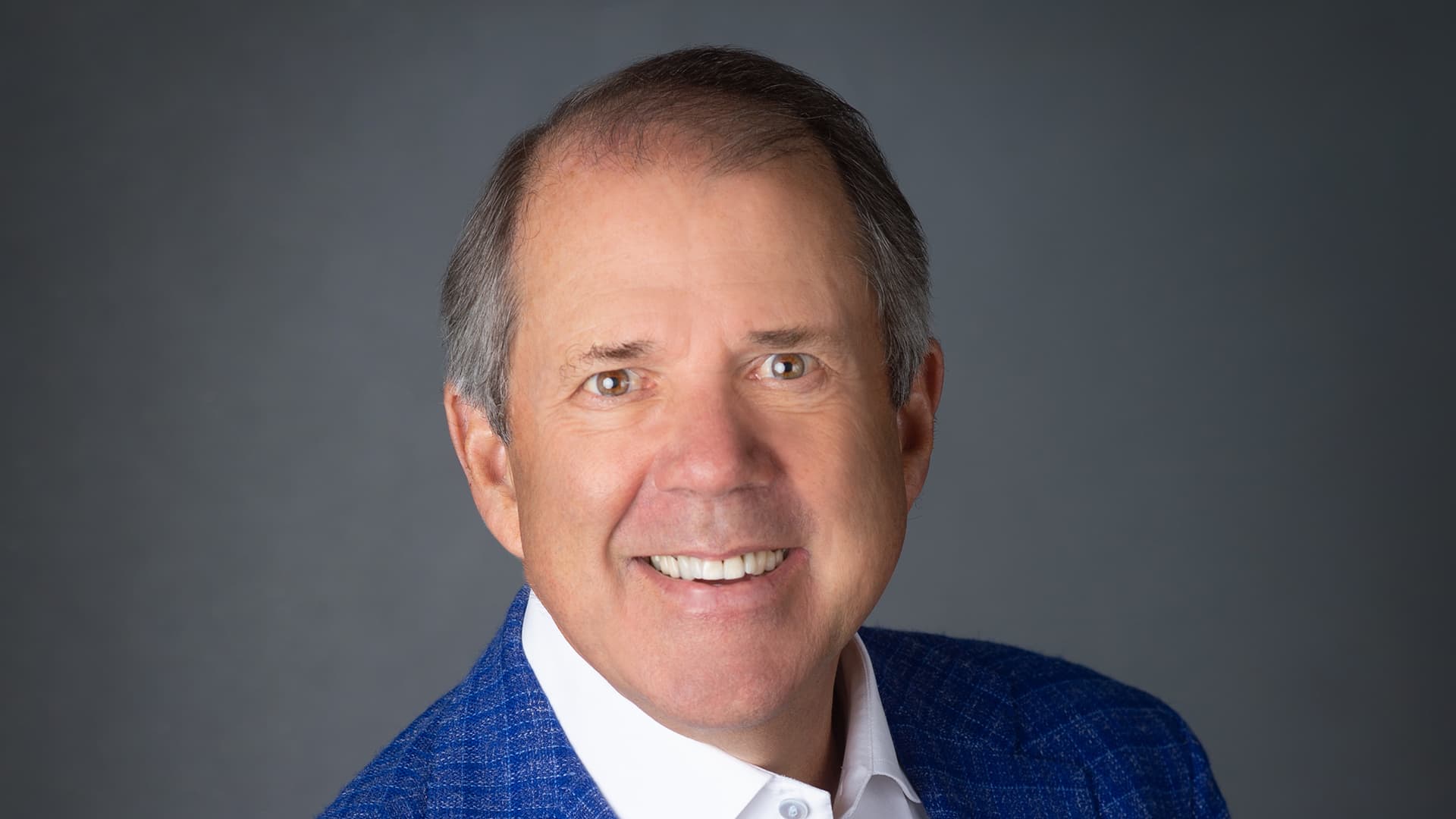
Camden Property Trust CEO Ric Campo.
Courtesy of Camden Property Trust
A version of this article first appeared in the CNBC Property Play newsletter with Diana Olick. Property Play covers new and evolving opportunities for the real estate investor, from individuals to venture capitalists, private equity funds, family offices, institutional investors and large public companies. Sign up to receive future editions, straight to your inbox.
Fundamentals in the multifamily apartment market are weakening as a historic surge of new supply continues to make its way through the pipeline and rental demand falls back. At the same time, investor demand for these properties is rising.
As an example, Camden Property Trust, a top-10 multifamily real estate investment trust, quietly began marketing its entire California apartment portfolio — 11 properties valued at roughly $1.5 billion — a few weeks ago and has already had significant interest.
“We have a huge demand for it right now,” Ric Campo, CEO of Camden, told CNBC. “Not two or three, but hundreds.”
Campo said the company wants to focus entirely on the Sun Belt, which is where 90% of its properties are now.
“We think the Sun Belt markets are going to — once they recover, which should happen, we think in ’26 or ’27 — they will be better growth dynamic markets than California and our long-term cash flow growth, or net operating income growth, will be better concentrated in the Sun Belt than Southern California, so it’s fundamentally why we’re selling.”
As for the timing, he said poor fundamentals are actually fueling demand.
“You’ve had no rent growth, yet you’ve had wage growth, and so affordability for apartments across America has gotten better,” Campo said. “And at the same time, if you look back at the last 20 years, only during really complicated recessions or the financial crisis have apartment rents stayed flat for more than a year or two, and so the market believes fundamentally that there’ll be a turn in the market.”
Fundamentals
Rents are falling because of rising vacancies. The national vacancy rate was 7.3% in January, a record high on Apartment List’s index, which dates back to 2017. Units are also taking an average of 41 days to get leased, four days more than in January 2025 and another high for the index.
“We’re past the peak of a multifamily construction surge, but a healthy supply of new units are still hitting the market and colliding with sluggish demand, causing vacancies to continue trending up,” said Chris Salviati, chief economist at Apartment List.
More than 600,000 new multifamily units hit the market in 2024, the most new supply in a single year since 1986. That came down to 500,000 in 2025, and 2026 is expected to bring even fewer, but still above average.
“Whether or not market conditions shift will now depend on rental demand, whose outlook has grown shakier due to weakness in the labor market and general economic uncertainty,” Salviati said.
Growing investor demand
As fundamentals weaken, however, investor interest in the sector from both private capital and REITs is strengthening. Multifamily led all real estate sectors in 2025 deal-making, according to Moody’s.
Mark Franceski, managing director of research and securities at Zelman & Associates, called it “a defining conflict.”
Trailing 12-month transaction volume has increased on an annual basis for 14 consecutive months, despite essentially no change to capitalization rates, according to Franceski.
“We still believe in it as stable and steady, and the long-term outlook is good, but fundamentals and investors point to the same thing: weakness,” Franceski said.
Berkadia’s 2026 Multifamily Investor Sentiment Survey, which surveyed 249 investors to assess anticipated transaction activity and opportunities within the sector in 2026, found that 87% of investors plan to moderately or aggressively expand their multifamily portfolios in 2026, “demonstrating cautious optimism despite ongoing challenges.”
In addition, a majority of investors (59%) expect moderate rental growth in the multifamily sector this year. Regionally, the Southeast, Midwest and Texas are forecast as the top regions for multifamily investment, fueled by migration trends, affordability and business-friendly policies, according to the Berkadia survey.
The play
So how do you unpack the disconnect between the seemingly robust investor appetite to own apartments and the soft demand fundamentals?
“They’re looking through the softness today to what they see as a better environment tomorrow,” said Samuel Sahn, managing partner and portfolio manager at Hazelview Investments, an Ontario, Canada-based firm with $11 billion in assets under management.
“For those private entities that have money to invest and are taking a five- to 10-year lens, because that is the time frame that they have in their private funds, they like what the world looks like in 2027 and beyond,” he added.
Sahn said an expected upturn in household formation and sharply slowing multifamily construction starts will ultimately give landlords more pricing power for both new leases and renewals.
Franceski, however, said location (which is of course an investment variable in all real estate) will be far more critical than usual in the coming cycle.
“I would treat [local] markets like stocks. It’s a market pickers’ market the same way the stock market is. People are hyperfocused on regions and markets,” he said.
Analysts scrutinizing Camden’s California exit also factor in state regulations.
“The positive is reducing exposure from a heavily regulated state versus CPT’s broader Sunbelt investment focus,” said Alexander Goldfarb, managing director and senior research analyst at Piper Sandler.
That’s exactly what Campo is arguing, despite some saying it overheated in the past decade and is now overbuilt.
“The regulatory construct in the Sun Belt is what drives Sun Belt growth. It’s pro-business. It’s a young population, a highly qualified workforce,” Campo said.
Meanwhile, Franceski offered another angle to the play: alternatives within the sector, like senior living and student housing. Those both fall under the multifamily umbrella and also see strong future demographic trends, especially senior living.
“Everybody’s got to live somewhere. The real focus is on solid operations and stability rather than growth industry,” he said.