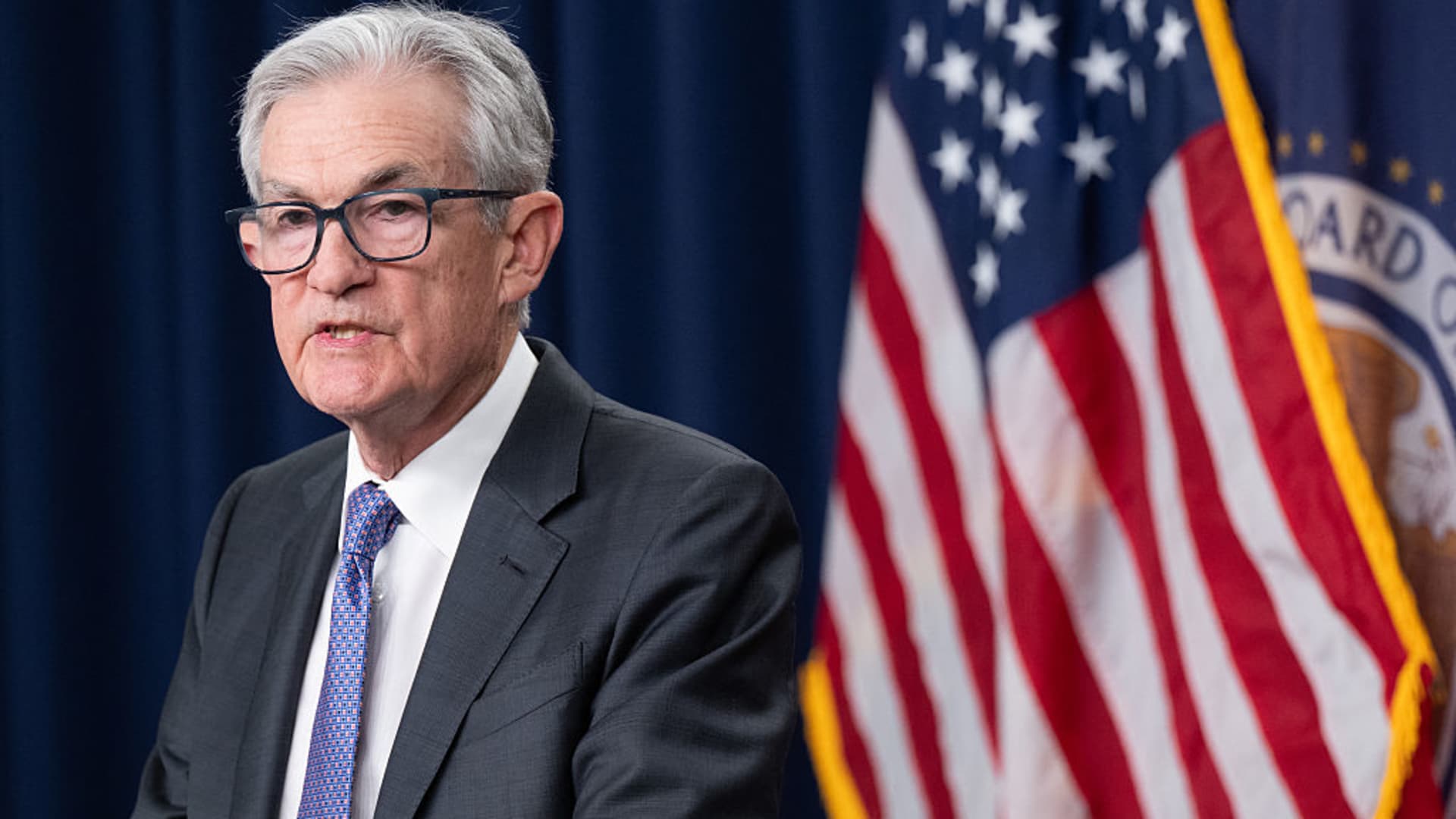
The criminal investigation into Federal Reserve Chair Jerome Powell is testing the U.S. central bank’s independence again and reinforcing the view among global investors that they need to diversify away from U.S. assets.
“That’s what seems to be transpiring this morning,” Julien Lafargue, chief market strategist at Barclays Private Bank, told CNBC’s “Europe Early Edition” on Monday.
Futures on the S&P 500, Dow Jones Industrial Average and the Nasdaq all moved lower on Monday after the Department of Justice opened an investigation into the $2.5 billion renovation of the Fed’s headquarters.

U.S. 10-Year Treasurys.
Powell called the probe “a consequence of the Federal Reserve setting interest rates based on our best assessment of what will serve the public, rather than following the preferences of the President,” in a video statement tweeted by the Fed’s X account on Sunday. Donald Trump has previously accused Powell of being too slow to cut rates, which continue to weigh on consumers, particularly in accessing housing.
Lafargue called the probe “a surprising move,” given that a new Fed chair will be announced in May when Powell’s chairmanship of the Fed is due to conclude.
Steve Englander, head of global G10 FX research and North American macro strategy at Standard Chartered, said the probe was Trump trying to intimidate Powell with “the Maduro option”: a warning that he could be removed by other means, referring to how the Venezuelan president, Nicolás Maduro, was seized in a U.S. military strike last weekend.
He also warned about the pace of the administration’s actions.
“The issue is the speed with which Trump is trying to do it,” Englander told CNBC’s “Squawk Box Europe” on Monday.

“Obviously, he has the midterms right in front of him. He wants to get interest rates down. I think he’s trying to intimidate the Fed — either by giving Powell the Maduro option of retiring and this all goes away, or by trying to get him off.
“Unlike with Lisa Cook, this time there’s an actual accusation, as opposed to just stuff you’re throwing into the air.”
It again places central bank independence — a key issue for investors throughout Trump’s tenure — in the spotlight, with attention turning to the U.S. 10-year yield and the potential for a broader drag on risk appetite into 2026.
“I think it will bring forth that sentiment that investors need to diversify away from U.S. assets,” Lafargue observed. “It will potentially create some pressure on the long end of the yield curve over time.”
‘Counterproductive’
Nabil Milali, multi-asset and overlay portfolio manager at Edmond de Rothschild Asset Management, said the president’s strategy is “paradoxically counterproductive.”
“By questioning the Fed’s independence, he is fueling upward pressure on rates, particularly at the long end of the curve, which we continue to avoid in our allocation,” Milali told CNBC in an email.

Looking to where investors may tilt their portfolios, Lafargue pinpointed China as “an increasingly popular trade,” highlighting the country as a continued beneficiary of the AI narrative.
While investors are less optimistic about the eurozone, there are pockets of opportunities — particularly around Germany’s infrastructure and defense stimulus, said Lafargue, adding there may be a rebound in healthcare, material and energy in the U.K.
While he said tensions between Trump and the Fed were “not a new narrative,” he added investors needed to understand “how quickly this thing can play out.” “We’ve heard this U.S. administration repeatedly critique the Fed… it may also accelerate the nomination of the new Fed chair potentially at Davos,” he added.
Credibility gap
Milali said the latest spat raises the risk that Powell’s successor “will have little credibility in the eyes of investors”, and will ultimately be subject to President Trump’s directives.
“The Trump administration’s latest attack on the Fed confirms that the goal of challenging the central bank’s independence has never been abandoned,” Milali added.
— CNBC’s Tasmin Lockwood contributed to this report.