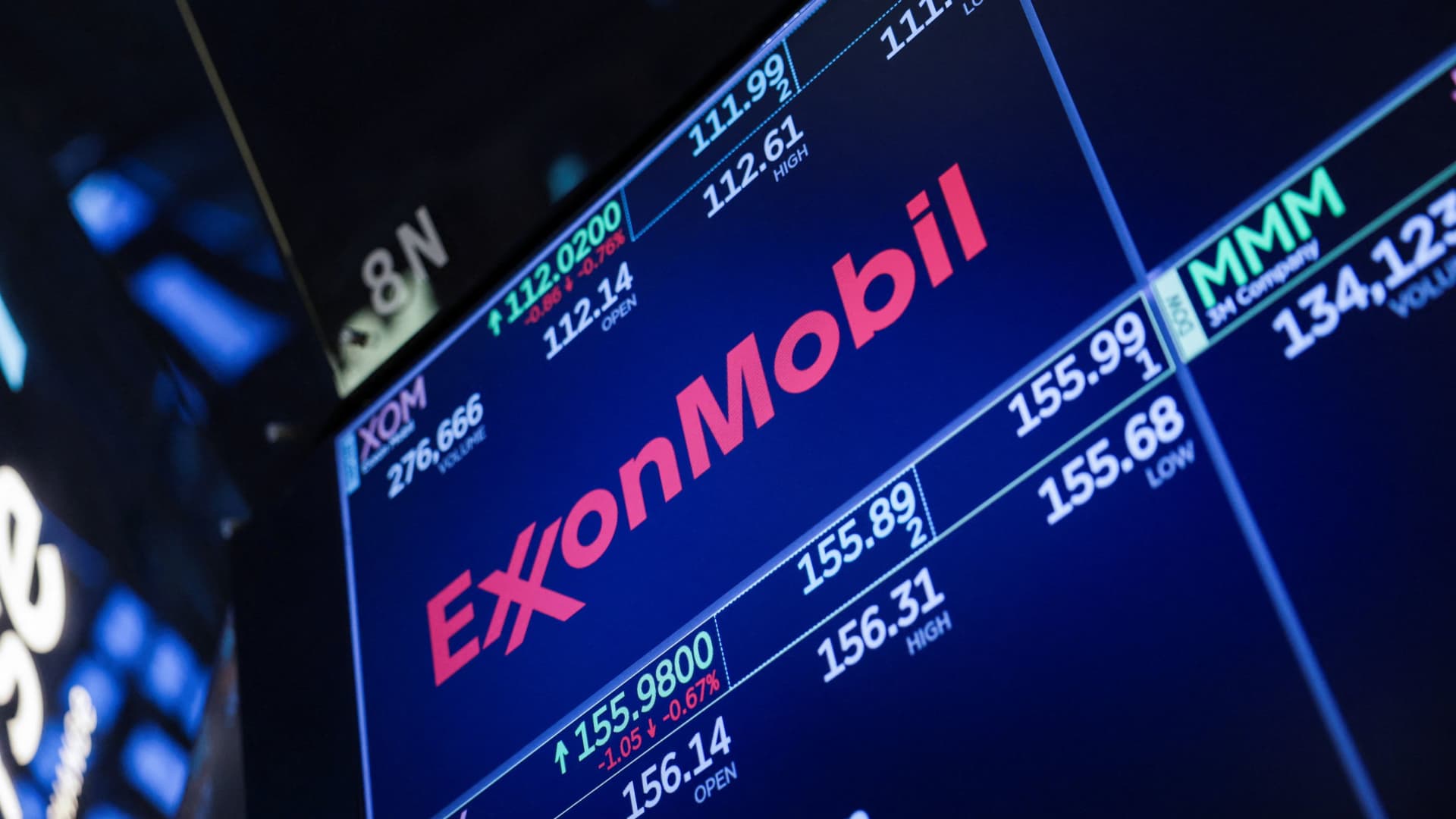
Exxon Mobil hit record highs this week after rubbing President Donald Trump the wrong way at a White House meeting on investment in Venezuela. Trump said Sunday he is inclined ” to keep Exxon out ” of Venezuela, after CEO Darren Woods told the president that the South American nation is ” uninvestable .” Exxon’s stock briefly dipped more than 1% on Monday after Trump’s threat, but investors ultimately shrugged off the president’s remark with shares closing off the lows. The oil major’s stock subsequently rose 2% the following day to close at a record of $126.54. It gained nearly 2% on Wednesday and hit an intraday all-time high. The broader S & P 500 energy sector rose more than 1% on Tuesday, as oil futures made gains with traders pricing in some risk of a supply disruption in Iran due to major social unrest in the OPEC member. But Exxon outperformed the energy sector. It outpaced rival Chevron on Tuesday, which Wall Street views as the likely winner in Venezuela due to its longstanding presence in the country. XOM 3M mountain XOM in past 3 months Exxon’s cautious approach to Venezuela is appropriate, said Jason Gabelman, analyst at TD Cowen. Shareholders don’t want it to rush back into a country that has seized its assets before, he said. “Exxon’s lost money in the country twice and they don’t want to have a third strike,” Gabelman said. But it still stands to benefit from the U.S. intervention in Venezuela even if it is not rushing back, he said. Exxon has the largest refining footprint among its peers, Gabelman said. It will benefit from Trump’s plan to bring tens of millions of barrels of Venezuela’s heavy, sour crude to refineries in the U.S., he said. “U.S refiners especially are configured to run that crude, including Exxon, so you have more of that supply potentially hitting the market,” Gabelman said. “That’s going to make that type of crude cheaper, so the refineries make more money as a result of that.” But the move higher in Exxon’s share price this week probably doesn’t have much to do with Venezuela in the end, Gabelman said. The oil major’s stock has been steadily rising on its business performance under Woods’ leadership, he said. Exxon has made high quality investments in oil production in Guyana and the Permian Basin and has liquified natural gas opportunities. Shareholders want Exxon to carefully evaluate Venezuela against those opportunities, the analyst said. “Exxon has probably the best resource portfolio in the industry, so the bar for them to take money they’re investing one place and shift it somewhere else is probably a bit higher than peers,” Gabelman said. Exxon’s investments in places like Guyana have reduced the oil price that it needs to cover its dividend, the analyst said. It has a stronger balance sheet than peers and its corporate earnings are growing faster because it is investing in upstream and downstream businesses, he said. “All of those things are making Exxon really a differentiated story among the majors,” Gabelman said.