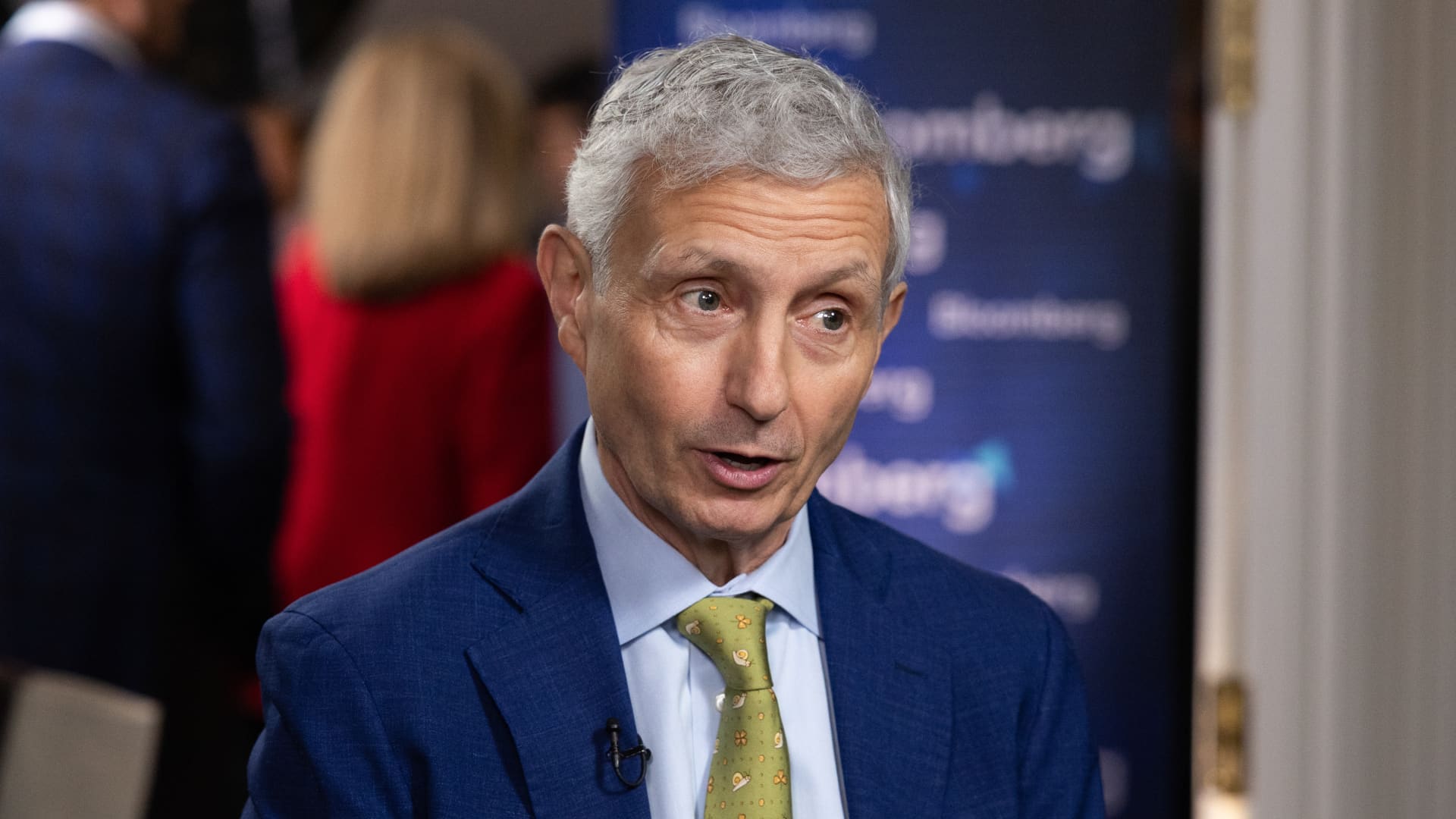
Raymond Stevens, chief executive officer of Structure Therapeutics Inc., during a Bloomberg Television interview at the JPMorgan Healthcare Conference in San Francisco, California, US, on Monday, Jan. 12, 2026.
Benjamin Fanjoy | Bloomberg | Getty Images
A version of this article first appeared in CNBC’s Healthy Returns newsletter, which brings the latest health-care news straight to your inbox. Subscribe here to receive future editions.
After the launch of the first-ever GLP-1 pill for weight loss from Novo Nordisk this month, obesity was top of mind at the annual JPMorgan Healthcare Conference, which drew thousands of pharma and biotech companies, investors, advisors and analysts.
I sat down with Ray Stevens, the CEO of obesity market hopeful Structure Therapeutics, about the biotech’s path forward and his expectations for the future of the booming GLP-1 space.
It’s a big year for Structure, as the company’s daily oral GLP-1 is slated to enter phase three trials. Shares of Structure soared more than 100% on Dec. 9 after it released midstage data showing that its pill, aleniglipron, helped patients with obesity lose more than 11% of their weight at 36 weeks, when adjusted for placebo.
Here are some highlights from my interview with Stevens at the conference.
What will define success for your company this year?
Stevens said 2026 is all about preparing for the phase three trials on aleniglipron. He said he believes Novo Nordisk’s now-approved pill and an upcoming rival oral drug from Eli Lilly will have strong launches, and that Structure’s pill is “next in line” to enter the market.
“I think we’ll have really good tailwinds going into that with a potentially best-in-class medicine,” he told CNBC.
Stevens said he’s proud of the data that came out on the drug in December, touting its “really good efficacy” and tolerability, or data on how well patients tolerated the treatment. In the phase two trial, there were no discontinuations due to side effects among patients who started the drug at a low dose of 2.5 milligrams.
What will make your pill competitive in the market?
Sheldon Cooper | Lightrocket | Getty Images
Stevens said there are four reasons.
First, efficacy. The phase two trial in December showed that a higher, 240-milligram dose helped patients lose up to 15.3% of their weight at 36 weeks, when adjusted for placebo.
Stevens said other competitors are reporting that level of weight loss after a longer time period, such as 60 to 72 weeks.
Safety is another factor, he added. For example, Structure observed no drug-related liver injuries across studies on the pill – an issue that dogged other experimental oral obesity treatments.
Stevens said the third reason is the relatively low cost of manufacturing the pill, which is a small-molecule drug.
“We have the ability to scale at a very large scale, and so we can supply the entire U.S. market easily,” he said.
The fourth factor, he said, is that Structure’s pill is combinable.
The company released data showing that it can pair its oral GLP-1 with its other drug targeting the amylin gut hormone and achieve “really synergistic effects,” Stevens said. He added that an oral GLP-1 can be combined with other types of treatments, such as PCSK9 inhibitors, or drugs that drastically lower “bad” LDL cholesterol.
“Aleniglipron is very combinable with other medicines, so we’re excited,” Stevens said.
What role do you believe pills will play in the space?
Oral drugs could expand the market, Stevens said. He noted that 100 million people in the U.S. need treatment for obesity but only around 5 million are receiving the existing injections.
The “real growth” and uptake of the pills is going to come from primary care physicians, who write the majority of prescriptions for Americans, Stevens said.
Those doctors prefer pills for their flexibility, he added.
Stevens said he has seen cases where patients taking the injections experience side effects and “are just really unhappy for a week and they will not get near that needle ever again.” But daily pills can make it easier to take the drugs.
For example, he said a patient could cut a pill in half to mitigate side effects on a day where they have an important meeting to attend.
What’s in store for the future of the obesity drug market?
Stevens said he believes combinations are “going to be the next phase of the field.”
“I feel like the winners are now starting to emerge for the monotherapy” treatments, he said. But Stevens said the patient population will segment according to the other health conditions a person has on top of obesity, such as fatty liver disease, chronic kidney disease and cardiovascular disease.
That’s where combinations can come in, helping treat a condition better than one product alone.
Looking further into the future, Stevens said he hopes that access and affordability are no longer an issue in the space. The market has made strides over the past year. Novo Nordisk and Eli Lilly are cutting cash prices for their injections and upcoming pills, while Medicare coverage for obesity drugs will start later this year.
Stevens said he is “okay with the cost dropping because to me, this has always been about volume and really trying to address a very large unmet need globally.”
He said he also hopes patients will have more treatment options in the future, whether that is a once-monthly injectable or different kinds of pills.
Feel free to send any tips, suggestions, story ideas and data to Annika at a new email: annika.constantino@versantmedia.com.