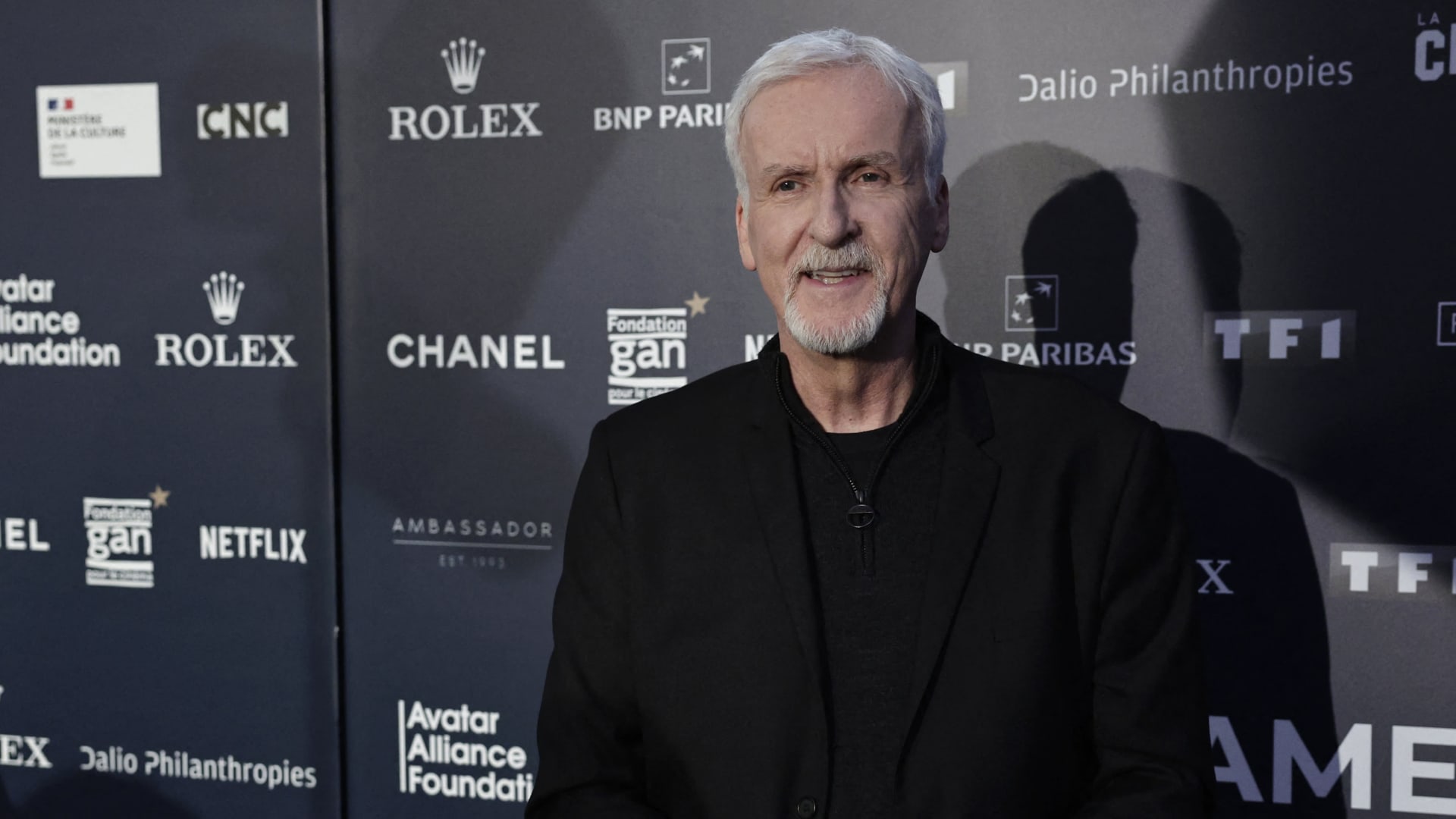
Canadian filmmaker James Cameron poses during a photocall for the opening of the exhibition entitled ‘The Art of James Cameron’ at the Cinematheque Francaise in Paris on April 3, 2024.
Stephane De Sakutin | AFP | Getty Images
Legendary “Titanic” director James Cameron is likening the theatrical experience to a “sinking ship” if Netflix acquires Warner Bros. Discovery’s film studio.
Cameron penned a letter to Sen. Mike Lee, R-Utah, last week, which was obtained by CNBC, in which he argues Netflix’s proposed acquisition of WBD’s studio and streaming assets could lead to massive job losses in Hollywood, fundamentally alter the theatrical landscape in the U.S. and negatively impact one of America’s largest export sectors.
Lee chairs the Senate subcommittee on antitrust, competitive policy and consumer rights, which met in early February to discuss the potential impact of the Netflix-Warner Bros. transaction. Cameron sent his letter in the days following the hearing, during which Netflix co-CEO Ted Sarandos and WBD executive Bruce Campbell testified.
“I believe strongly that the proposed sale of Warner Brothers Discovery to Netflix will be disastrous for the theatrical motion picture business that I have dedicated my life’s work to,” Cameron wrote to Lee. “Of course, my films all play in the downstream video markets as well, but my first love is the cinema.”
Cameron has been vocal in his opposition to the proposed tie-up, and his concerns echo those of the broader filmmaking industry, which generally sees combinations of movie studios resulting in fewer releases and less work. Cameron’s letter to Lee, which has not been previously reported, escalates his concerns to the lawmakers who could potentially stand in the way of Netflix completing its acquisition.
“We have received outreach from actors, directors, and other interested parties about the proposed Netflix and Warner Brothers merger, and I share many of their concerns,” Lee said in a statement. “I look forward to holding a follow-up hearing to further address these issues.”
In response to a request for comment, a Netflix representative pointed to Netflix’s written testimony and Sarandos’ comments during the hearing earlier this month.
In its written testimony, Netflix outlined its investments in the film and TV production industry and its impact on the overall U.S. economy, including $20 billion in planned film and TV spend in 2026, a majority of which it said will be spent in America.
“With this deal, we’re going to increase, not reduce, production investments going forward, supported by a stronger combined business and balance sheet,” Netflix said, noting its production facilities, such as in New Mexico and an upcoming New Jersey-based studio.
Since the deal’s announcement, Netflix’s top brass has consistently voiced their belief that the deal would not only win regulatory approval, but would be good for the media industry.
During a recent earnings call, Sarandos called the deal “pro-consumer … pro-innovation, pro-worker.”
He has said on multiple occasions that the addition of WBD’s studio would preserve jobs — even as layoffs roil the media ecosystem — and has said the assets would bring new businesses under Netflix’s umbrella.
“We’re going to need those teams, these folks that have extensive experience and expertise. We want them to stay on and run those business,” Sarandos said. “So we’re expanding content creation, not collapsing it in this transaction.”
In addition to concerns specific to filmmakers and across the theater industry, the proposed Netflix-WBD transaction has awakened other regulatory questions.
In particular, critics have raised alarm about bringing together two of the top global streaming services – Netflix with 325 million global subscribers and WBD’s HBO Max with 128 million as of Sept. 30. Lawmakers have already questioned how a merger of those services would impact consumers and prices.
Paramount Skydance has leveraged some of the same arguments in its attempt to unseat Netflix and buy the entirety of WBD through a hostile tender offer.
Sarandos and co-CEO Greg Peters have argued competition for viewers includes various platforms – from traditional TV to streaming services to social media platforms like YouTube – making Netflix a small part of the ecosystem.

Theatrical shifts
Cameron, who has pioneered the creation of new filming technologies during his decades-long career, including 3D production systems, advanced visual effects and high-frame-rate display, noted that theatrical exhibition has been a critical part of his “creative vision.”
He also highlighted previous comments by Sarandos calling movie theaters “an outdated concept” and an “outmoded idea,” in addition to comments telling investors that “driving folks to a theater is just not our business.”
“The business model of Netflix is directly at odds with the theatrical film production and exhibition business, which employs hundreds of thousands of Americans,” Cameron wrote. “It is therefore directly at odds with the business model of the Warner Brothers movie division, one of the few remaining major movie studios.”
Cameron noted that WBD releases around 15 theatrical films a year, volume that movie theater operators rely on at a time when production has shrunk and consumer habits have shifted.
He also suggested that the merger would “remove consumer choice by reducing the number of feature motion pictures that are made” as well as “restrict the choices of film-makers looking for studios to invest in their projects, which will in turn reduce jobs.”
Cameron touched on recent trade policy shifts by the Trump administration that have sought to protect U.S. exports. President Donald Trump has more than once floated the idea of tariffs to protect Hollywood.
“The US may no longer lead in auto or steel manufacturing, but it is still the world leader in movies,” Cameron said. Under a Netflix-WBD merger, “That will change for the worse.”
Cameron also questioned whether Netflix would honor verbal commitments its executives have made around future theatrical releases, including how long they would play in theaters and how many theaters they would play in.
In its written testimony from earlier this month, Netflix said it plans to put Warner Bros. films in theaters with 45-day windows and would continue to employ these employees, since “we don’t have those kinds of workers at Netflix today.”
“We are not acquiring these amazing assets to shut them down, but to build them up,” according to the testimony.
Still, Cameron questioned whether those commitments would hold.
“Their pledge to support theatrical releases (a business fundamentally at odds with their core business model) is likely to evaporate in a few years,” he said.
“Once they own a major movie studio, that is irrevocable,” he added. “That ship has sailed (as I like to say, mindful that I directed ‘Titanic.’ I am very familiar not only with ships that sail, but also those that sink. And the theatrical experience of movies could become a sinking ship.)”