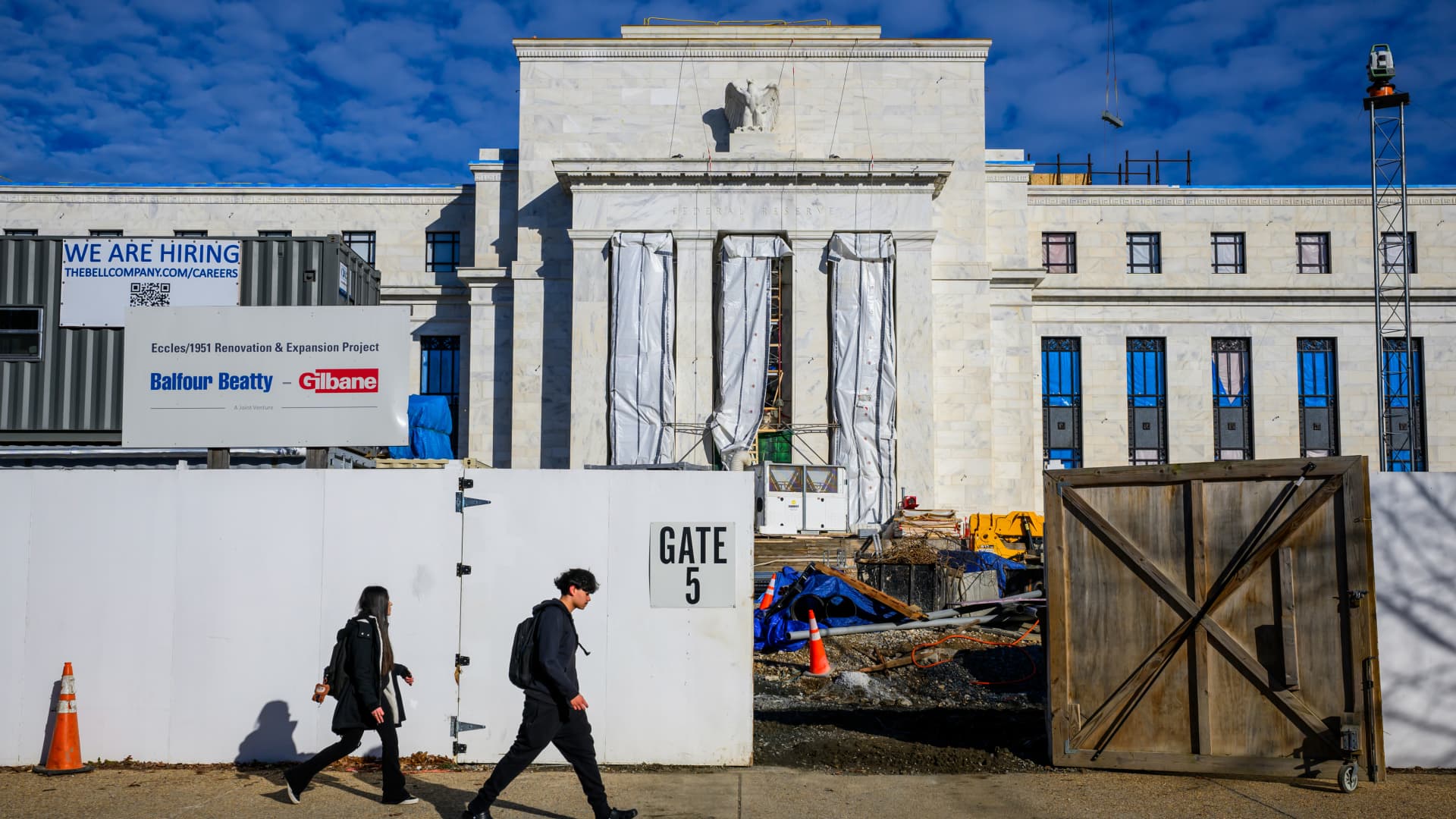
Construction on the Marriner S. Eccles Federal Reserve Board Building in Washington, Jan. 12, 2026.
Pete Kiehart | Bloomberg | Getty Images
The Federal Reserve kept its benchmark interest rate unchanged Wednesday at the conclusion of its first policy decision of the year.
In the face of escalating political pressure from President Donald Trump, a softening labor market, persistent inflation pressures and an uncertain geopolitical landscape, “there is no shortage of confusing narratives,” said certified financial planner Stephen Kates, a financial analyst at Bankrate. “That puts the Fed in a difficult position.”
For Americans struggling to keep up with sky-high interest charges, the central bank’s decision does little to change the affordability crunch.
The federal funds rate, which is set by the U.S. central bank, is the interest rate at which banks borrow and lend to one another overnight. Although that’s not the rate consumers pay, the Fed’s moves still affect the rates consumers see every day. But not all borrowing costs are benchmarked off the Fed.
Generally, short-term rates, like credit cards, are closely pegged to the prime rate, which is the rate that banks charge their most creditworthy customers — typically 3 percentage points above the federal funds rate. Longer-term rates, such as home loans, are more influenced by inflation and other economic factors.
From mortgage rates and credit cards to auto loans and savings accounts, here’s a look at how the Fed affects your finances.
Mortgages
There’s little the central bank can do about that because fixed mortgage rates, specifically, don’t directly track the Fed but typically follow the lead of long-term Treasury rates.
A sign is posted in front of a home for sale in San Rafael, California, Jan. 9, 2026.
Justin Sullivan | Getty Images
Unless mortgage rates, incomes or home prices change by a sizable amount, “affordability is likely to remain historically strained, reinforcing the lock-in effect for existing homeowners and keeping entry barriers high for first-time buyers,” Jones said in a statement.
To help lower interest rates on home loans, Trump said earlier in January that he was directing Fannie Mae and Freddie Mac to buy $200 billion in mortgage-backed bonds.
The average rate for a 30-year, fixed-rate mortgage sank briefly on the news and is now 6.15% as of Tuesday, according to Mortgage News Daily, down from over 7% a year ago.
Credit cards
Most credit cards have a variable rate, so there’s a direct connection to the Fed’s benchmark.
After the Fed cut rates three times in the second half of 2025, the average credit card interest rate in the U.S. fell to 23.79% in January, marking the lowest level in almost three years, according to Matt Schulz, chief credit analyst at LendingTree — and APRs “are likely to continue their slow, downward trend for at least a little while longer,” he said.
Still, the difference is “not earth-shattering,” he added.

Auto loans
Although interest rates on new-car loans have edged lower, buyers are borrowing larger amounts — the average amount financed for a new car recently reached an all-time high, according to Edmunds. The share of car owners who are “underwater” on their outstanding auto loans, or have negative equity, is also at a five-year high, Edmunds found.
“The Fed’s decision to keep rates steady through March will not noticeably impact consumers on its own, but it will certainly dampen the confidence of shoppers looking to take advantage of better rates in the new year,” said Joseph Yoon, consumer insights analyst at Edmunds.
Trump’s tariffs on foreign-made vehicles and car parts aren’t helping keep costs down either, other experts say.
Student loans
Savings
On the upside, top-yielding online savings accounts still offer above-average returns.
While the central bank has no direct influence on deposit rates, yields tend to be correlated with changes in the target federal funds rate — so holding that rate unchanged could keep savings rates above the rate of inflation, which is considered a rare win.
“Four years ago, rates were basically zero; now, you can get 3% to 3.5%,” said Bankrate’s Kates, which is still “a decent return.”
And yet, the personal savings rate, or the percentage of personal income that was put into savings, recently fell to 3.5%, the lowest level since October 2022, largely because consumers are having a harder time keeping up with the higher cost of living.